
The Destination Thailand Visa (DTV) is Thailand’s digital nomad visa: a five-year, multiple-entry visa for remote workers and freelancers who earn their income outside Thailand. Each stay can last up to 180 days and can be extended once by another 180 days, you must show at least 500,000 baht in funds, and the fee is 10,000 baht. Two things changed in 2026. Since 31 August, applications must include a certificate of criminal record clearance and proof of permanent residence. And from 15 September, visa-free tourist stays for travelers from around 60 countries, including the United States, the United Kingdom, Canada, Australia and most of the EU, were cut to 30 days, which makes the DTV the straightforward route for anyone staying longer. The catch many people miss: the DTV does not let you work for Thai clients, and it does not exempt you from Thai tax.
This guide to the Thailand digital nomad visa covers who qualifies, the documents, how to apply, how stays and extensions work, what it costs, and the tax rules to plan around. Thai visa rules are changing quickly, so confirm everything on the official Thai e-Visa site and your nearest embassy or consulate page. This is general information, not legal, tax or immigration advice.
DTV at a glance
| What to know (2026) | |
|---|---|
| Official name | Destination Thailand Visa (DTV), workcation category for digital nomads, remote workers, freelancers and “foreign talent” |
| Validity | 5 years, multiple entry |
| Stay per entry | Up to 180 days, with one extension of up to 180 days at Thai immigration. After that you must leave and re-enter on the same visa |
| Funds | Evidence of at least 500,000 baht, roughly US$15,000 to $16,000 depending on the exchange rate |
| Fee | 10,000 baht, non-refundable. Embassy pages list local-currency equivalents, often in the region of US$340 to $350 |
| Where to apply | Online through the Thai e-Visa system, from outside Thailand |
| Processing | Varies. One embassy page lists 5 working days, and incomplete applications reset the clock |
| Work | Remote work for employers or clients outside Thailand only. No Thai work permit and no Thai clients |
| Family | Spouse and children under 20 can apply, each with their own application and proof of funds |
| Tax | No exemption. Staying 180 days or more in a calendar year generally makes you a Thai tax resident |
What changed in 2026
New documents from 31 August 2026
Thailand’s Department of Consular Affairs announced on 28 August 2026 that the supporting documents for DTV applications had changed, with effect from 31 August. The requirement for a “document indicating current location” was replaced by a requirement to provide proof of permanent residence, and a certificate of criminal record clearance was added. Applications submitted through the e-Visa system before 31 August continue to be processed under the old rules. The Royal Thai Embassy in Moscow reposted the announcement and links to the original notice.
Be careful with the “proof of permanent residence” wording. The Moscow embassy repost uses it generically, but reports of the London embassy’s version describe it as proof of permanent residence in the UK, Ireland or a British Overseas Territory. What counts for you may depend on where you apply and where you live, so check your own consulate’s page before you gather documents. Dependents under 16 are reportedly allowed to use the main holder’s police clearance certificate.
Visa-free stays cut to 30 days from 15 September
Thailand published four Interior Ministry regulations in the Royal Gazette on 31 August 2026 that halve the standard visa-free stay from 60 days to 30 for about 60 countries and territories, including the United States, the United Kingdom, Canada, Australia and most EU countries. They took effect on 15 September. The exemption is for tourism only, travelers entering by land are reportedly limited to two visa-free entries per calendar year, and a one-time extension of up to 30 days is reported to be available at an immigration office. Anyone admitted on or before 14 September keeps the stay stamped on entry.
For remote workers the effect is simple: visa runs and long stretches on a tourist exemption are harder, and a stay of more than a month or two points toward the DTV. See our visas guide for why tourist status is not a work permission.
Who qualifies for the Thailand digital nomad visa
- Workcation applicants. Remote employees, freelancers, business owners and other “foreign talent” earning income from employers or clients outside Thailand.
- Soft power applicants. People joining Thai cultural or training activities such as Muay Thai, cooking courses, sports training, medical treatment, seminars or music festivals. They use a different document set, and Muay Thai applicants need a letter from the Sports Authority of Thailand and a certified gym.
- Family. A spouse and children under 20 can apply as dependents. They need proof of relationship, the main holder’s passport and DTV pages, and the same 500,000 baht funds evidence.
The DTV is a poor fit if you want to work for a Thai company or serve Thai clients, since holders cannot obtain a Thai work permit on it. It also gives no tax relief, so it is not a shortcut for people who want a Thai tax advantage. Here is how it compares with the other long-stay options in 2026, using figures reported by the Thaiger and official embassy pages, which you should confirm:
| Option | Upfront cost | Financial bar | Best for |
|---|---|---|---|
| Visa-free tourist entry | None | None | Visits of up to 30 days for most Western passports since 15 September 2026. Not for work |
| Destination Thailand Visa (DTV) | 10,000 baht | 500,000 baht in savings | Remote workers and freelancers staying for months |
| Long-Term Resident (LTR) visa, Work-from-Thailand Professional track | About 50,000 baht | Around US$80,000 a year in income | Higher earners who want a 10-year status |
| Thailand Privilege (Elite) | From about 650,000 baht | Membership fee | People who want a paid, low-admin long stay |
Documents you need
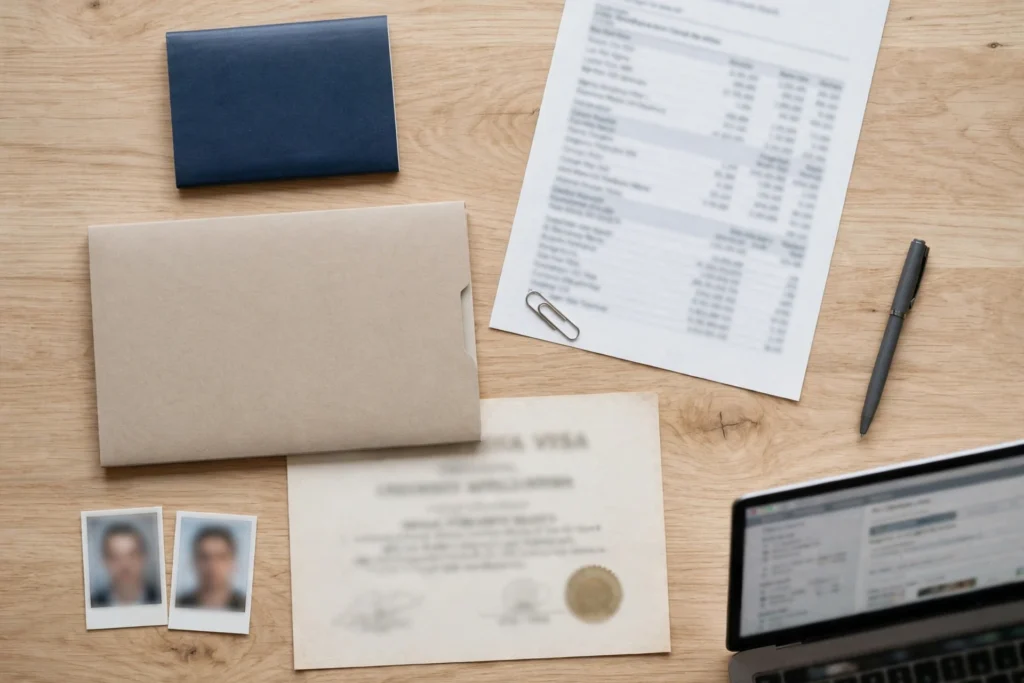
Requirements differ slightly between embassies, so use the checklist on the page for the mission you will apply through. The core workcation set is:
- Passport with at least six months of validity and blank pages, plus a recent photo.
- Proof of funds of at least 500,000 baht or the equivalent, usually a bank statement showing your name and date. Embassies ask for the last three or six months depending on the mission, and at least one embassy page says crypto and other investment statements are not accepted.
- Proof of your remote work. An employment contract or employment certificate from an employer outside Thailand, or, if you are not employed, a professional portfolio showing your digital nomad or freelancer status. Some missions also ask for a letter confirming your remote status.
- Proof of permanent residence (new since 31 August 2026), replacing the document indicating your current location.
- A certificate of criminal record clearance (new since 31 August 2026).
- Extra documents for some nationalities, which some embassies list separately. Check the mission page for your country.
Upload clear PDFs, not screenshots. One embassy page warns that missing documents, screenshots or unclear files lead to requests for more documents, which delays the visa. The consular officer can also ask for an interview or extra evidence.
How to apply, step by step
- Check your mission’s DTV page. Bank statement length, translation rules and extra documents vary, and the 31 August changes apply to everyone.
- Order the slow documents first. A criminal record certificate can take weeks, and some missions require translation or authentication. Start there.
- Prepare your funds evidence. Make sure the account shows at least 500,000 baht on a statement that carries your name and date. Keep the money in place while the application runs.
- Create an account on the Thai e-Visa system at thaievisa.go.th, choose the Destination Thailand Visa and upload your documents. Applications are online-only and must be made from outside Thailand.
- Pay the fee and respond quickly to requests. The fee is non-refundable, and an incomplete application resets the processing time on the day you submit the missing items.
- Prepare to enter. Complete the Thailand Digital Arrival Card before you travel, and carry your visa approval and funds evidence in case officers ask.

Staying, extending and re-entering
- Each entry gives you up to 180 days. You can then apply to Thai immigration for one extension of up to 180 days, reported to cost 1,900 baht.
- After 180 plus 180 days you must leave. You can re-enter on the same DTV for as long as it remains valid, which is five years from issue.
- Report every 90 days. Like other foreigners staying more than 90 consecutive days, DTV holders are reported to need 90-day address reporting.
- Do not work for Thai clients. The visa is for remote work for employers and clients outside Thailand. A Thai work permit is a separate process.
What it costs
| Item | Reported 2026 cost |
|---|---|
| DTV fee | 10,000 baht per person, paid in the currency your mission lists (often around US$340 to $350 on embassy pages) |
| Extension at Thai immigration | About 1,900 baht |
| Criminal record certificate | Varies by country |
| Authentication and translation of documents | Varies, and only if your mission requires it |
| Funds evidence | 500,000 baht that remains your money, not a fee |
Health insurance is not listed among the required documents on the embassy pages we checked, but you should not go without it. See how to choose health insurance as a digital nomad, especially if you plan to rent a scooter.
Tax: the part to plan before you land
The DTV is an immigration document, not a tax ruling. Under Thai law, spending 180 days or more in a calendar year generally makes you a Thai tax resident, whatever visa you hold. Since 1 January 2024, under Revenue Department instructions Por. 161/2566 and 162/2566, foreign-sourced income that a Thai tax resident brings into Thailand is generally taxable in the year it is remitted, no matter when it was earned, for income earned from 2024 onward. Income earned before 2024 is reportedly still exempt when remitted.
In mid-2025 the Revenue Department proposed a two-year exemption window, under which foreign income remitted in the year it is earned or the year after would be tax-free. Law-firm trackers reported that it had still not been published as law as of July and August 2026, so do not plan around it. The Revenue Department is the source to check for updates.
What this means in practice:
- The 180 days are counted per calendar year, not per stay. A single maximum-length stay of 180 days plus an extension can pass the threshold on its own.
- Staying under 180 days in a calendar year generally keeps you a non-resident for Thai purposes, though your home country’s rules still apply.
- Remitting money into Thailand is what triggers tax for residents. How cards, ATM withdrawals and transfers are treated is not fully settled, so keep clear records and separate pre-2024 savings from newer income.
- US citizens have separate obligations under US rules, including the foreign earned income exclusion tests.
Our digital nomad taxes guide explains how tax residency works in general, and a cross-border tax professional can advise on your own case before you plan a long stay.
Mistakes that sink applications
- Using an old checklist. Guides written before 31 August 2026 miss the criminal record certificate and the proof of permanent residence.
- Uploading screenshots or unclear files. They trigger requests for more documents and delay the visa.
- Showing funds in the wrong form. Some missions do not accept crypto or investment statements, so use an ordinary bank statement unless your mission says otherwise.
- Applying from inside Thailand. The DTV application is made from outside the country.
- Assuming you can take Thai clients. The visa does not allow local work or a work permit.
- Planning a 360-day stay without a tax plan. A long stay can make you a Thai tax resident.
- Paying anyone who guarantees approval. Nobody can, and the application is straightforward enough to do yourself with the right documents.
Is the DTV right for you?
- A good fit: remote employees and freelancers with foreign clients, people who can show 500,000 baht in funds, and anyone planning to base in Thailand for several months across a year.
- A poor fit: people who want to work for Thai companies or clients, anyone who wants a tax advantage in Thailand, and visitors staying less than a month who can use the tourist exemption.
If you are choosing a base, read our Chiang Mai guide for costs, the February to April burning season and healthcare, and the best countries guide to compare the DTV with Spain, Portugal, Georgia, Colombia and others. A month-long test stay is usually wiser than a long commitment, as our slow travel guide explains.
Frequently asked questions
Is the DTV Thailand’s digital nomad visa?
Yes. The Destination Thailand Visa (DTV) is the visa most people mean by “Thailand digital nomad visa”. Its workcation category covers digital nomads, remote workers and freelancers who earn from employers or clients outside Thailand.
How much money do I need for the Destination Thailand Visa?
You must show financial evidence of at least 500,000 baht, usually a bank statement in your name. It is proof of funds, not a payment, so the money stays yours, though missions may ask for the last three or six months of statements.
How long is the DTV valid, and how long can I stay?
The visa is valid for five years with multiple entries. Each entry allows up to 180 days, and you can apply to extend once by another 180 days at Thai immigration, after which you must leave and re-enter.
Can freelancers get a DTV?
Yes. If you are not employed, you can submit a professional portfolio showing your freelancer, remote worker or digital nomad status instead of an employment contract.
Can I work for Thai clients on a DTV?
No. Holders cannot obtain a Thai work permit on the DTV or work for Thai companies or Thai clients. It is for remote work for employers and clients based outside Thailand.
Do I have to apply from outside Thailand?
Yes. Applications are made online through the Thai e-Visa system from outside the country, so plan the application before you travel.
Is the DTV still available after the 2026 changes?
Yes. The August 2026 changes added a criminal record certificate and proof of permanent residence to the documents, and the September changes cut visa-free tourist stays to 30 days for many nationalities. The DTV itself continues to operate.
Does the DTV make me a Thai tax resident?
Not by itself, but spending 180 days or more in a calendar year generally does, and remitted foreign income can then be taxable. The visa gives no tax exemption, so plan your days and get advice for your situation.
Last reviewed: October 2026. Thai visa documents changed on 31 August 2026 and visa-exempt stays changed on 15 September 2026, and rules, fees, processing times and tax treatment vary by embassy and change quickly. Reported figures are approximate and exchange rates move. This article is general information, not legal, tax or immigration advice; confirm details on the Thai e-Visa site and with your embassy or consulate.