Eating healthy on a budget while traveling comes down to a few habits: stay somewhere with a kitchen and cook simple meals, shop where locals shop, eat at busy local restaurants rather than tourist spots, keep healthy snacks on hand for travel days, and take food and water safety seriously so you do not lose days to illness. For remote workers, what you eat also affects your energy and focus, so a steady routine matters more than any single meal.
What “healthy” means on the road
You do not need a special diet. A simple guide is the Harvard Healthy Eating Plate: fill about half your plate with vegetables and fruit, a quarter with whole grains and a quarter with protein, cook with healthy oils and drink water. That pattern works with almost any local cuisine, whether it is rice and curry, beans and tortillas, or bread, salad and fish. The World Health Organization gives similar advice, including limiting added sugar, salt and highly processed foods.
1. Stay somewhere with a kitchen
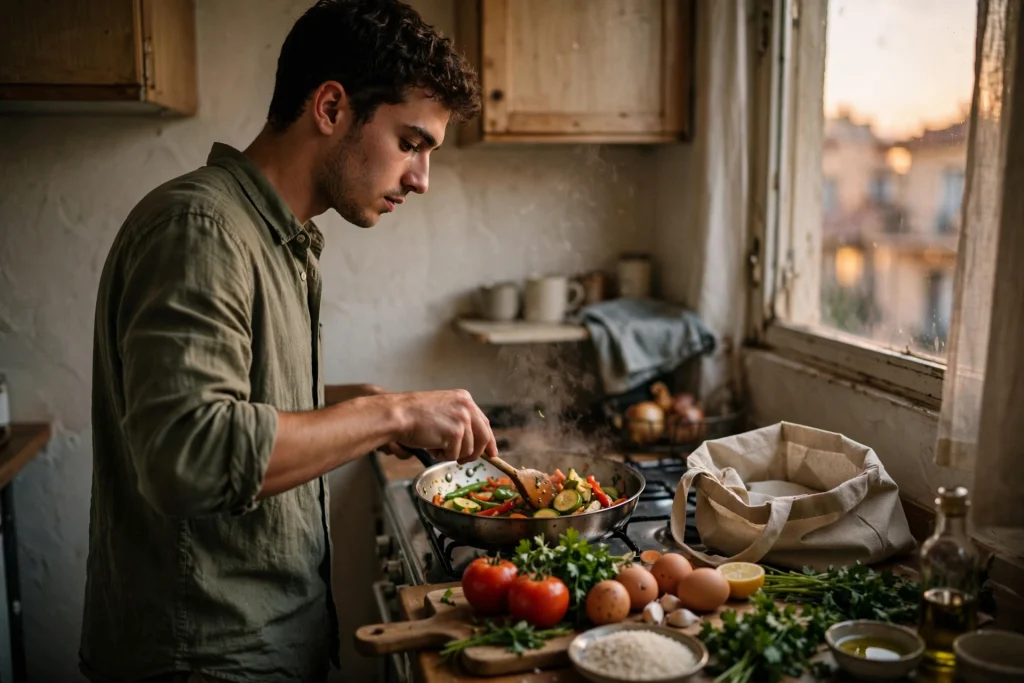
A basic kitchen is the single biggest saving for long-term travelers. Even if you eat out often, making your own breakfast and a few simple lunches keeps costs down and gives you control over what you eat. When booking, check for a fridge, stove, a decent pan and a sharp knife, and ask the host if photos are unclear. Slow travel makes this easier, because monthly rentals almost always include a kitchen; see our slow travel guide.
2. Shop like a local
- Use markets for fresh produce. Local markets usually have cheaper, fresher fruit and vegetables than supermarkets, especially in Southeast Asia and Latin America.
- Buy local staples. Imported foods cost much more. Build meals around what is grown and eaten locally.
- Avoid supermarkets in tourist areas. A short walk to a neighborhood shop can halve the price of the same items.
- Buy for a few days, not a month. Small fridges and frequent moves make bulk buying wasteful. Staples like oats, rice, lentils and nuts are the exception.
3. Eat out smartly
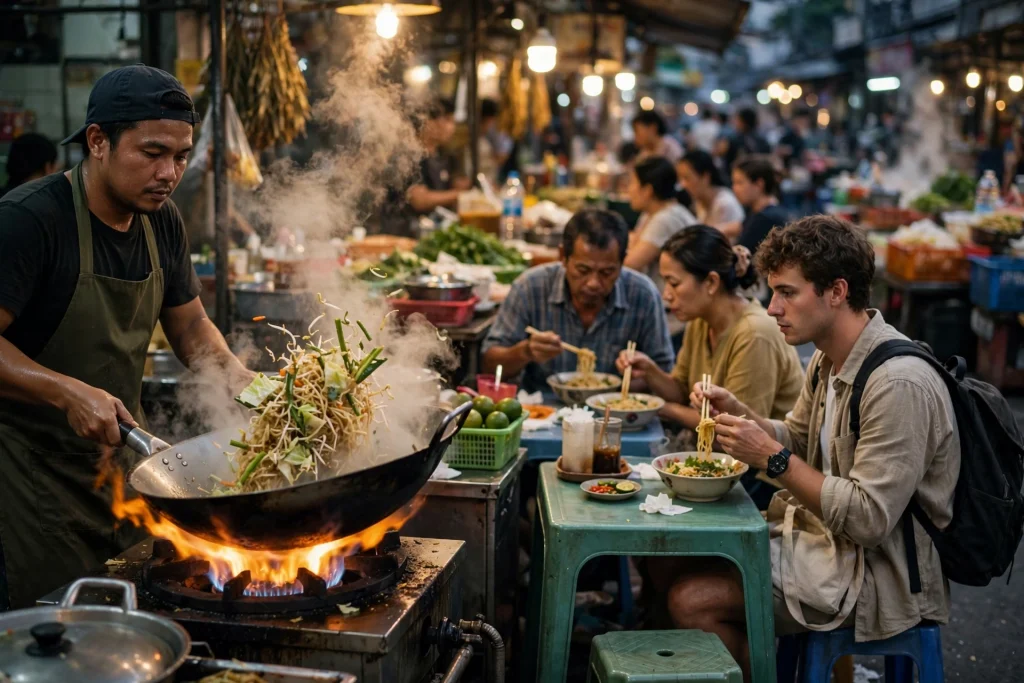
In many cheaper destinations, a meal at a local restaurant costs little more than cooking at home. A few habits keep it healthy and affordable:
- Eat where locals eat. Busy places with high turnover and food cooked to order are usually cheaper and fresher.
- Look for set lunch menus. Many countries have a good-value fixed lunch, such as the menu del día in Spain and Latin America.
- Order dishes with vegetables and lean protein, and share large portions.
- Drink water with meals. Soft drinks, juices and alcohol add cost and sugar quickly.
- Use apps like HappyCow to find vegetarian and vegan options.
4. Food and water safety abroad
Getting sick costs you money, workdays and energy. The CDC’s travel health guidance advises travelers to avoid drinking or putting tap water in their mouths unless they are reasonably sure it is safe, which can include ice and water used to brush teeth. The CDC also notes that bottled water is not always safer than tap water in some places, and that some food safety factors, like restaurant hygiene, are out of a traveler’s control. Practical steps:
- Check whether tap water is safe in each destination, and ask your host.
- Where it is not, use sealed bottled water, a large refillable water container, or disinfect water. The CDC recommends boiling water for a full minute, and a portable filter or UV purifier can reduce plastic waste for long stays.
- Choose food that is cooked and served hot, and fruit you peel yourself.
- Wash your hands before eating, and carry hand sanitizer for street food.
If you do get sick with severe symptoms, a high fever or symptoms that do not improve within a few days, see a doctor. Make sure your travel health insurance covers outpatient visits.
5. Eat for energy and focus
For remote workers, food affects the workday. You do not need supplements or special products; a few basics make a noticeable difference:
- Eat a proper breakfast with protein and fiber, such as eggs, yogurt, oats or beans, rather than just coffee and a pastry.
- Keep lunch moderate. A very heavy lunch often leads to a sluggish afternoon.
- Drink water through the day, especially in hot climates, where dehydration shows up as tiredness and headaches.
- Watch the caffeine. Café-hopping makes it easy to drink more coffee than you realize, which can affect sleep.
If you are considering supplements, read our evidence-based guide to supplements for travelers and talk to a doctor first.
6. Cheap, healthy meal ideas
| Meal | Ideas that work almost anywhere |
|---|---|
| Breakfast | Oats with fruit and nuts; eggs with bread and tomatoes; yogurt with local fruit |
| Lunch | Rice or grain bowl with vegetables and beans; big salad with eggs or canned fish; local set menu |
| Dinner | Vegetable stir-fry with rice or noodles; lentil or bean stew; grilled fish or chicken with salad |
| Snacks | Fruit, nuts, yogurt, boiled eggs, hummus with vegetables |
7. Plan for travel days
Airports, bus stations and trains are where healthy eating usually falls apart. Pack a simple travel-day kit: fruit, nuts, a sandwich or wrap, and an empty water bottle to fill after security. For more on travel-day routines, see how to stay fit while traveling.
8. Budget for food, then relax
Set a weekly food budget for each destination and track it alongside your other costs. Leave room for trying local specialties, which is part of the point of traveling. Our guide to traveling full-time on a budget shows how food fits into an overall monthly budget.
Frequently asked questions
How can I eat healthy while traveling on a budget?
Stay somewhere with a kitchen, shop at local markets, cook simple meals built around vegetables, grains and protein, and eat at busy local restaurants rather than tourist spots.
Is street food safe to eat?
Often, yes, especially at busy stalls where food is cooked to order and served hot. Avoid food that has been sitting at room temperature, raw items washed in untreated water, and ice if you are unsure of the water source.
Should I drink tap water abroad?
Only if you are reasonably sure it is safe. Where it is not, use sealed bottled water, boil water for a full minute, or use a reliable filter or purifier.
Last reviewed: September 2026. This article is general information, not medical or nutritional advice. If you have a health condition or dietary requirements, consult a qualified professional.