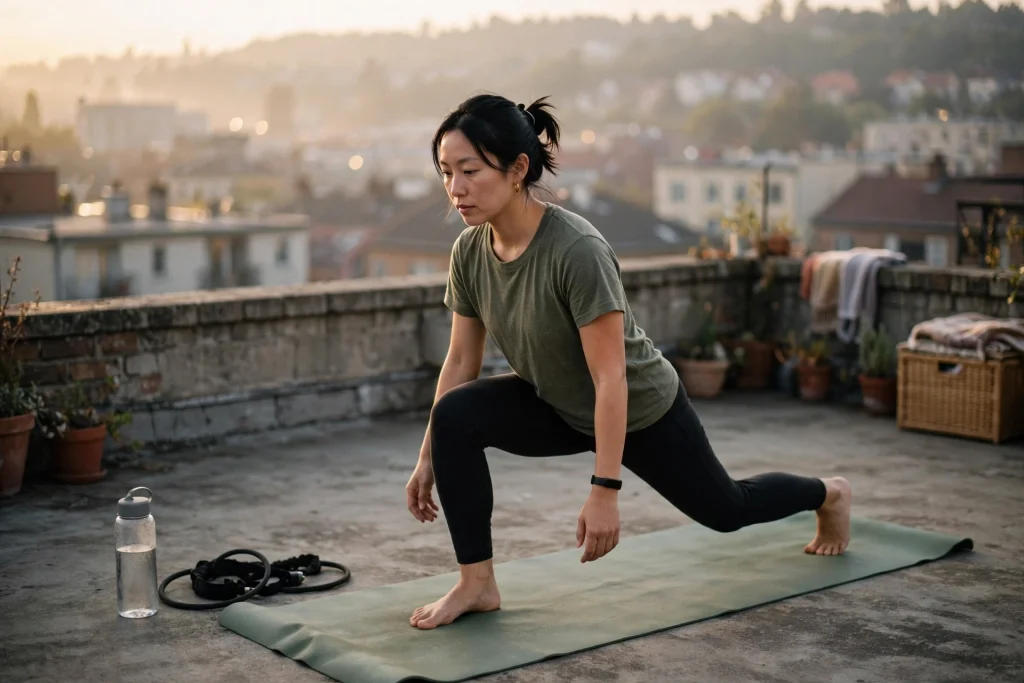
You can stay fit while traveling without a gym by combining three things: walking as much as possible, two or three short bodyweight strength sessions a week, and a few minutes of mobility work to undo long days of sitting and flying. A 20-minute routine in your apartment, done consistently, beats an ambitious plan you drop after the first move. This guide gives you a no-equipment workout, a plan for travel days and practical ways to find gyms and classes wherever you base yourself.
How much exercise do you actually need?
The World Health Organization recommends that adults do 150 to 300 minutes of moderate aerobic activity a week (or 75 to 150 minutes of vigorous activity), plus muscle-strengthening activities on two or more days a week. It also recommends limiting sedentary time.
For a traveling remote worker, that translates into something very manageable: a brisk 30-minute walk most days and two or three short strength sessions a week. The biggest risk for nomads is not a lack of gyms but long stretches of sitting at a laptop, on planes and on buses.
1. Walk everywhere you reasonably can
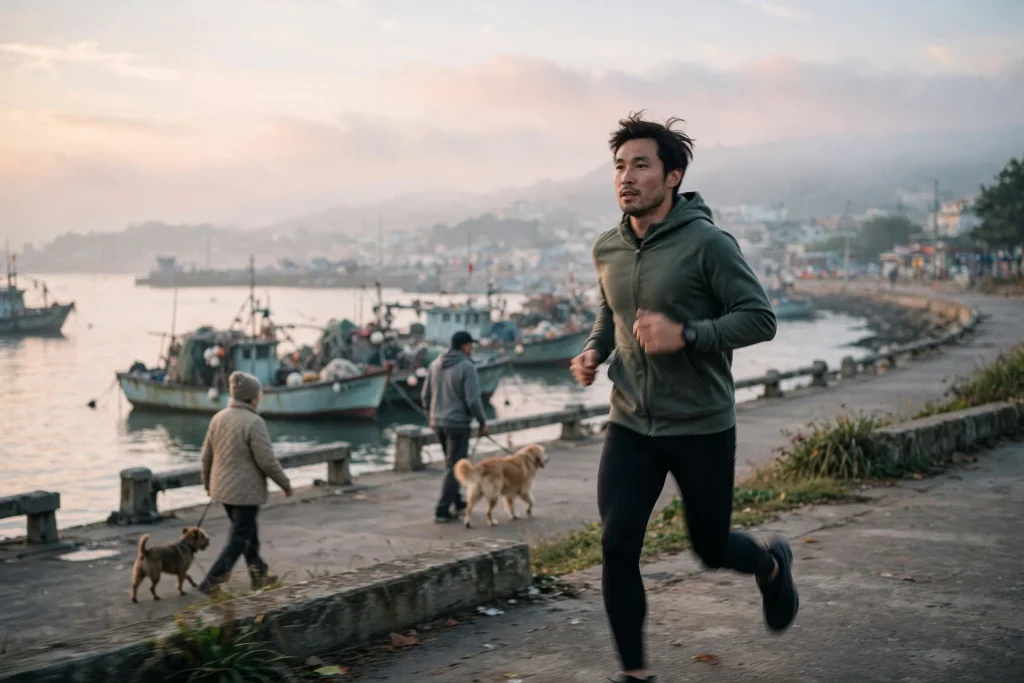
Walking is the easiest exercise to keep up on the road because it doubles as exploring. Choose accommodation in a walkable neighborhood, walk to your coworking space or café, and take calls on foot when you do not need your screen. If you run, a morning run is a good way to learn a new city before it gets busy or hot. Check local air quality before running hard in cities with pollution seasons.
2. A 20-minute bodyweight workout for any room
This circuit needs no equipment and fits in a small apartment. Do each exercise for 40 seconds, rest for 20 seconds, and repeat the circuit three or four times. Scale it up or down to your level, and skip anything that causes pain.
| Exercise | Easier option | Harder option |
|---|---|---|
| Squats | Squat to a chair | Jump squats or slow tempo |
| Push-ups | Hands on a table or wall | Feet raised on the bed |
| Reverse lunges | Hold a chair for balance | Hold a full backpack |
| Glute bridges | Both feet down | Single leg |
| Plank | From your knees | Lift one foot or arm |
| Mountain climbers or high knees | March in place | Faster pace |
Add a light resistance band to your bag for rows and shoulder work, which are hard to train with bodyweight alone. It weighs almost nothing and fits in any packing list; see our digital nomad packing list for other small essentials.
3. Mobility for laptop workers
Hunching over a laptop on café tables and sofas takes a toll on your neck, back and hips. Five minutes of mobility work at the end of the workday helps:
- Chest opener in a doorway, 30 seconds per side.
- Hip flexor stretch in a half-kneeling position, 30 seconds per side.
- Cat-cow on hands and knees, 10 slow reps.
- Child’s pose, one minute of slow breathing.
- Neck rolls and shoulder shrugs, a few each way.
A better workspace also reduces strain. Raise your laptop to eye level with a stand and use a separate keyboard where you can. Our ergonomic travel gear guide covers portable options. For guided sessions, see our roundup of yoga and meditation apps for travelers.
4. A plan for travel days
- Before you leave: a short walk or a 10-minute circuit so you are not sitting all day from the start.
- At the airport: walk the terminal instead of sitting at the gate, and stay hydrated.
- On long flights and bus rides: get up to walk when it is safe to, and do ankle circles and calf raises in your seat.
- When you arrive: go for a walk outside in daylight. It helps your body clock adjust as well as your legs. See how to beat jet lag for more.
5. Finding gyms and classes abroad
If you stay somewhere for a month or more, a local gym or class often costs far less than at home and gives you a routine and a community. Ways to find one:
- Ask for a day pass or a one-month membership rather than an annual contract.
- Check map apps for gyms, climbing walls, yoga studios and martial arts schools near your accommodation, and read recent reviews.
- Ask in local nomad or expat groups; members often share discounts and recommendations.
- Look for outdoor options: many cities have free outdoor gyms, running clubs or group workouts in parks.
Joining a weekly class is also one of the easiest ways to meet people. See how to make friends while traveling solo.
6. Make it a habit, not a project
- Tie workouts to something you already do, such as right after your morning coffee or before you open your laptop.
- Set a minimum. On bad days, do just one round of the circuit. Keeping the habit matters more than any single session.
- Schedule it. Put workouts in your calendar like meetings. Our work-life balance guide has a daily routine that includes exercise.
- Travel slower. Routines survive a monthly move far better than a weekly one.
Food, sleep and hydration
Exercise works best alongside decent food and sleep. Eat mostly simple, local whole foods, drink plenty of water in hot climates, and protect your sleep schedule when you change time zones. Our guide to eating healthy on a budget while traveling has practical ideas.
Frequently asked questions
How can I stay fit while traveling without a gym?
Walk as much as possible, do a 20-minute bodyweight circuit two or three times a week, and add a few minutes of stretching after long days at your laptop. A light resistance band adds variety without taking up space.
How often should I work out while traveling?
The WHO recommends 150 to 300 minutes of moderate activity a week plus strength training on at least two days. Daily walking and two or three short strength sessions will get most travelers there.
What is the best workout for a small hotel room?
A bodyweight circuit of squats, push-ups, lunges, glute bridges and planks needs about two square meters of floor and no equipment. Doing each for 40 seconds with 20 seconds of rest, for three or four rounds, takes about 20 minutes.
Last reviewed: September 2026. This article is general information, not medical advice. If you have a health condition or injury, check with a doctor before starting a new exercise routine.