Budapest is a large Central European city with a lively café scene, good public transport and a time zone that overlaps with Europe and the US East Coast. It sits inside the Schengen area, so non-EU visitors are limited to 90 days in any 180 unless they hold a permit. This guide covers entry, costs, districts, healthcare, safety and community, with every figure dated and sourced and the open questions marked.
It is general information, not legal, tax, medical or safety advice. Costs come from crowdsourced data and move with exchange rates, and visa rules change, so confirm details with official sources before you go.
Budapest at a glance
| What to know | |
|---|---|
| Monthly cost for one person (our sum of Numbeo figures, October 2026) | About 480,000 Hungarian forints with a one-bedroom outside the centre, or about 540,000 with one in the centre |
| Short stays | Up to 90 days in any 180-day period for eligible nationalities under the Schengen rules |
| Longer stays | Need a visa or permit. Hungary has a remote-work permit called the White Card, and we could not confirm its current requirements from an official source |
| Public transport | A monthly pass costs about 9,000 forints, according to Numbeo |
| Healthcare for visitors | A GHIC or EHIC covers medically necessary state care for those eligible, and is not a substitute for travel insurance |
Visas and entry
Short stays. UK government advice says visa-free travel is allowed for up to 90 days in any 180-day period, that visits to other Schengen countries in the previous 180 days count toward the 90 and that border control may ask for a return or onward ticket, proof of funds and proof of accommodation. It also says passports must have been issued less than 10 years before arrival and must be valid for at least three months after you plan to leave. The new Entry/Exit System requires biometric registration on short stays, which can mean longer border waits.
Longer stays. The same advice says stays over 90 days need a visa or work permit, and that time spent under a residence permit or long-stay visa does not count toward the 90-day limit. Working in Hungary has different requirements, covered in separate guidance. Our slow travel guide explains how to plan around the Schengen limit.
The White Card. Published guides describe a Hungarian residence permit for remote workers called the White Card, for people who work for employers or clients outside Hungary. Those guides disagree on the income requirement, with figures that differ in amount and in whether they are gross or net, and we could not read the official Hungarian source. This guide therefore gives no figure.
Check the current White Card requirements, fees and documents with the Hungarian immigration authority (bmbah.hu) or a Hungarian consulate before you plan around it.
Tax is separate from your visa. Time spent in Hungary can create tax duties, and US citizens keep US filing duties. Read digital nomad taxes for the general picture, and check the Hungarian tax authority or a professional before a long stay. Our visas guide explains how remote-work permits work in general.
What it costs
Numbeo is a crowdsourced database, so treat its numbers as a guide, not a quote. The Budapest page was last updated on 11 October 2026 and drew on 293 contributors and 2,439 entries over the past year. Figures are in Hungarian forints (Ft), and exchange rates move, so convert at the current rate.
| Item | Numbeo estimate |
|---|---|
| One-bedroom apartment, city centre | 267,222 Ft a month (range 230,000 to 325,000) |
| One-bedroom apartment, outside the centre | 206,364 Ft a month (range 180,000 to 250,000) |
| One person’s monthly costs, excluding rent | 273,151 Ft |
| Broadband internet, 60 Mbps or faster | 7,704 Ft a month (range 5,890 to 10,500) |
| Basic utilities, 85 square metre apartment | 56,475 Ft a month (range 38,250 to 76,500) |
| Monthly public transport pass | 9,000 Ft (range 8,950 to 10,000) |
| Gym membership | 21,942 Ft a month (range 15,000 to 30,000) |
| Meal at an inexpensive restaurant | 4,500 Ft (range 3,000 to 6,500) |
Adding rent to monthly costs gives about 480,000 forints outside the centre and about 540,000 forints in the centre. That sum is our arithmetic, and it does not include insurance, travel or coworking. Utilities can be higher in winter if heating is included, so ask what a landlord’s quote covers. Check the transport operator’s own price list before you buy a pass, since fares change. See how to travel full-time on a budget.
Districts compared
Published guides most often mention the central Pest districts (V, VI, VII and XIII), the Buda side and the Újlipótváros area. The descriptions below summarise those guides and our own judgment, so visit in person and book a short stay first. Numbeo’s figures above are a better guide to the gap between the centre and the outskirts than any single district number.
| Area | Commonly described as | Consider |
|---|---|---|
| Districts V, VI and VII | Central, with cafés, restaurants and nightlife | Higher rents and more noise, especially in the nightlife area of District VII |
| District XIII and Újlipótváros | Residential and well connected, with a more local feel | Fewer sights on the doorstep |
| Buda side | Quieter and greener, with hills | Longer trips to Pest, and steeper streets |
Winter
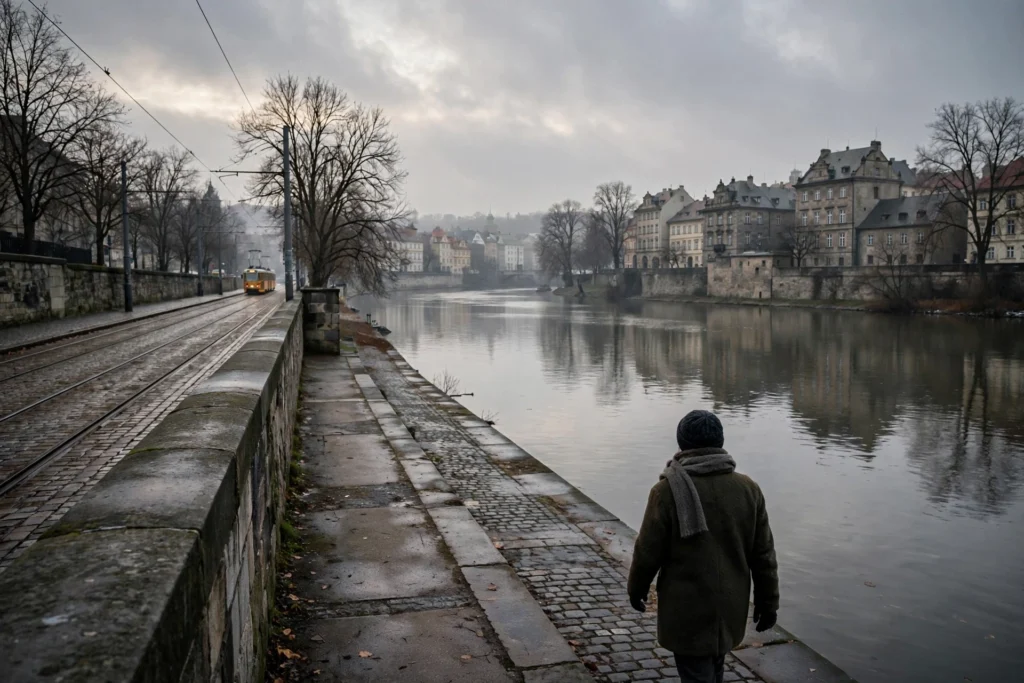
Winters in Central Europe are cold and the days are short, which matters for mood and energy as well as heating costs. Before you commit to a winter stay, ask about heating type, who pays for it and how well the apartment is insulated.
We have not included daylight, temperature or air-quality figures because we could not source them to a named service. Check the Hungarian meteorological service for current data.
Healthcare and insurance
UK government advice says visitors need a Global Health Insurance Card (GHIC) or European Health Insurance Card (EHIC) for medically necessary state healthcare in Hungary, and that it is not an alternative to travel insurance. It does not cover private healthcare, private clinics or repatriation. The emergency number is 112, and the advice notes that medicines prescribed or bought in the UK may have a different legal status in Hungary.
Longer stays raise questions about residency-based healthcare, which depend on your permit and employment. Our health insurance guide lists what to check.
How healthcare works for people on a long-stay permit depends on the permit and on employment. Ask the immigration authority and your insurer.
Safety and scams
- Pickpocketing. UK advice says bag-snatching and pickpocketing are common in Budapest, and more likely on busy public transport, at train stations, at markets and in tourist areas.
- Taxis and bars. Some taxi drivers take commission for steering passengers to certain bars and clubs, and some venues charge very high prices, with tourists taken to cashpoints to pay. Use taxis from a reputable local company, ask to see the price list before you order and check your bill.
- Drinks. Drink spiking has been reported in bars. Buy your own drinks and keep them in sight.
- Money. Use official ATMs or bank branches and do not change money on the street.
- Transit tickets. Validate tickets as required, or you could be fined.
- Demonstrations. Rallies often take place on national holidays, including 15 March and 23 October, and have sometimes turned violent. Move away from large crowds and monitor local media.
Check your own government’s current travel advice before you go. Our guide to digital nomad scams covers rental fraud to avoid.
Community, coworking and working hours
Budapest has coworking spaces and laptop-friendly cafés, mainly in the central districts. We do not list venues because prices and opening hours change, so visit a few before you pay for a membership. For mobile data, see eSIM vs local SIM. To meet people, choose activities with a repeating schedule, and read our guides to loneliness and making friends while traveling solo. The time zone suits European hours and part of the US East Coast day, and our time zone guide shows how to plan the overlap. For a comparison with another European base, see Lisbon.
Who Budapest suits, and who it does not
- A good fit: people who want a big, walkable European city, who work European or US East Coast hours and who plan for the Schengen limit or a permit.
- A poorer fit: people who need a clear long-stay route without paperwork, those who dislike cold, dark winters and anyone who wants the lowest costs in the region.
Frequently asked questions
Do I need a visa to live in Budapest?
Eligible nationalities can stay up to 90 days in any 180-day period under the Schengen rules. Stays over 90 days need a visa or permit, which you should check with the Hungarian embassy.
What is the Hungary White Card?
Published guides describe it as a residence permit for remote workers employed by or serving clients outside Hungary. We could not confirm its current income threshold and terms from an official source, so check the Hungarian immigration authority or a consulate.
How much does it cost to live in Budapest?
Using Numbeo’s crowdsourced figures from October 2026, one person’s monthly costs plus a one-bedroom rent come to about 480,000 forints outside the centre and about 540,000 forints in the centre. That excludes insurance, travel and coworking. Convert at the current exchange rate.
Is Budapest safe?
Most visits are trouble-free, but UK government advice warns about pickpocketing, taxi commission schemes, overpriced bars and drink spiking. Use reputable taxis, check prices first and keep drinks in sight.
Is winter in Budapest hard for remote workers?
Winters are cold and the days are short, which can affect energy and mood. Plan heating, light exposure and a regular routine, and ask landlords what the winter bills include.
Sources
- UK Foreign, Commonwealth & Development Office, “Hungary travel advice”: entry requirements, safety and security, health. Accessed October 2026.
- Numbeo, “Cost of Living in Budapest”. numbeo.com. Crowdsourced data, updated 11 October 2026. Accessed October 2026.
Last reviewed: October 2026. Visa rules, costs and conditions change. Cost figures are crowdsourced estimates and exchange rates move. This article is general information, not legal, tax, medical or safety advice; confirm details with official sources and local guidance.