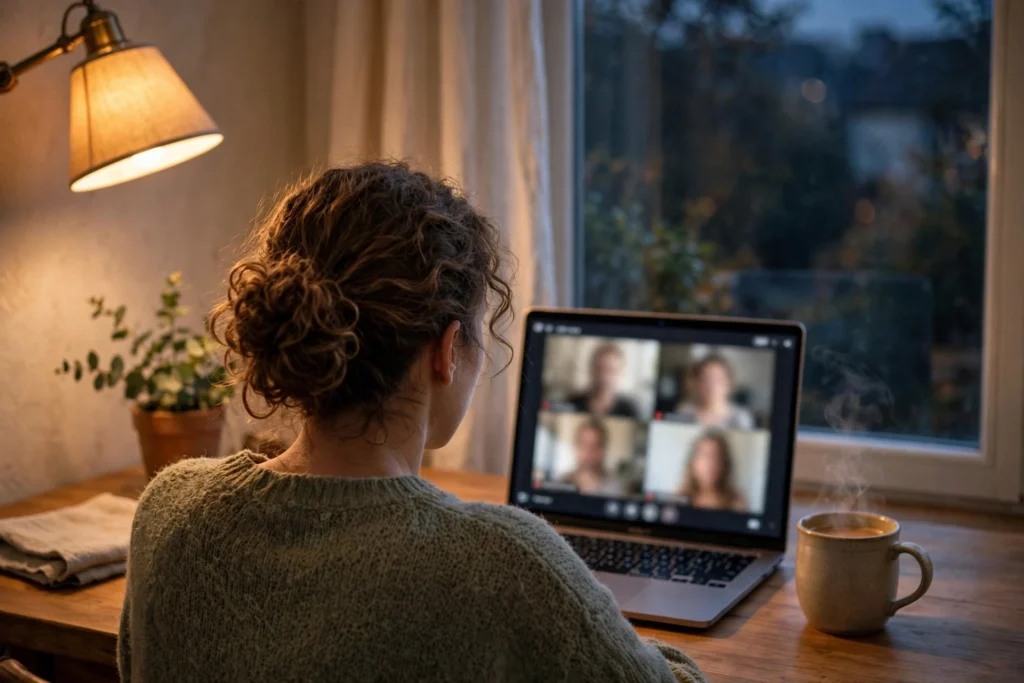
Therapy abroad is possible, and many remote workers keep care going while they move by combining three options: a therapist in the country they are in, an online therapist, or a mix of both. The hard parts are practical. You have to check where the therapist is allowed to treat you, how your insurance treats care outside your home country, how privacy works across borders and what to do if you need urgent help. This guide covers how to find support, what to ask, and where to turn in a crisis.
This is general information, not medical advice and not a diagnosis. If you are in immediate danger or thinking about harming yourself, contact local emergency services or a crisis line now, using the help section below.
If you need help right now
- Local emergency services: call the emergency number for the country you are in.
- Find A Helpline: findahelpline.com is a public service run by ThroughLine. It says it partners with verified helplines in more than 175 countries, and describes the helplines as free, anonymous and confidential.
- United States: the 988 Suicide and Crisis Lifeline says it is for everyone, free, open 24/7/365, by call, text (988) or chat, with text and chat also in Spanish. Its site does not say whether it works from outside the US, so check before you rely on it abroad.
- UK and Ireland: Samaritans is on 116 123, free, 24 hours. Its page does not say whether the number works from other countries. Its email and letter services have closed, and web chat is only a small-scale pilot.
If you are worried about someone else, stay with them where you safely can and contact local emergency services.
The short version
- You do not need to wait for a crisis. Many people use therapy for stress, loneliness, burnout or a big life change.
- Ask any therapist where they are licensed and whether they can treat you in the country you are in. Rules vary, and we could not confirm them from an official source.
- Check your insurance for telehealth and for care outside your home country before you book.
- Language, time zone and a stable schedule matter. A change of base can interrupt care, so plan sessions around your moves.
Why this is worth planning
The World Health Organization’s fact sheet on mental disorders, dated 11 September 2026, says nearly 1 in 7 people worldwide, about 1.2 billion, were living with a mental disorder in 2023. It says most people with mental disorders do not have access to effective care, and gives about one-third of people with depression as receiving formal mental health care. The fact sheet names psychological treatment as an option for anxiety disorders, depression and post-traumatic stress disorder, with medicines also considered for anxiety and depression depending on age and severity. It does not cover remote workers, so these figures describe the general population.
Life on the move adds pressure: isolation, uncertainty about visas and money, and constant change. Read our guides on loneliness, burnout and travel fatigue to see whether what you feel is common, then use this page to plan support.
Three ways to get support
| Option | Good for | Watch for |
|---|---|---|
| A therapist where you live | In-person sessions, local language and local crisis knowledge | Language, availability, quality checks and how to confirm credentials in that country |
| An online therapist from your home country | Continuity if you keep seeing the same person as you move | Licensing and where the therapist may treat you, time zones and data privacy |
| An online therapist who works with expats or in your language | Experience with the stresses of moving abroad | The same licensing and privacy questions, plus how to verify credentials |
UK government advice for Mexico, which we used in our Playa del Carmen guide, links to FCDO and TravelHealthPro mental health guidance. Look for your own government’s travel advice for the country you are in, because it may list what support exists locally.
Questions to ask before you start
- Where are you licensed, and are you allowed to treat a client who is physically in this country? We searched for official guidance on this and did not find a state board or compact page that answers it, so ask the therapist and check with the licensing body.
- What happens if I have an emergency while we are in different countries, and what is your plan?
- How do you store notes and handle video calls, and which country’s privacy rules apply?
- What are the fees, the currency and the cancellation rule? See our guide to currency conversion fees for how card charges in another currency work.
- Do you offer sessions at times that fit my time zone and schedule?
- Do you have experience with expats, nomads or people in transition?
Insurance and cost
Whether insurance pays for therapy abroad, or for online sessions with a therapist in another country, depends on your policy. UK government advice for Mexico says to make sure insurance covers local treatment and that some hospitals expect payment up front. Ask your insurer in writing about outpatient mental health cover, telehealth and claims from abroad. Our health insurance guide lists what to check, and our healthcare abroad guide covers prescriptions and telehealth. If you take medication, ask your doctor how to continue it abroad before you travel.
Habits that support therapy
Therapy works best alongside the basics. Sleep matters for mood, and our guide to sleep while traveling sets out a routine. Community helps too, and our guide to coworking for digital nomads explains how to meet people. If you are weighing a bigger change, see time to stop being a digital nomad.
Frequently asked questions
Can I see my usual therapist while I live abroad?
Some therapists continue online, some cannot. It depends on their licence, their employer or practice policy and local rules. We could not confirm the rules from an official source, so ask the therapist directly.
How do I find a therapist in a country where I do not speak the language?
Search for providers who list your language, ask your embassy or your insurer for a directory, and check your government’s travel advice. Confirm credentials before you start.
Are crisis lines available outside my home country?
Find A Helpline lists verified helplines in more than 175 countries. The 988 and Samaritans pages do not say whether their numbers work from abroad, so look up a local line for the country you are in.
Do I need a diagnosis to start therapy?
No. Many people begin with stress, loneliness or burnout. A therapist or doctor can talk through what you are experiencing. We cannot diagnose or advise on your situation.
What should I do if I feel unsafe?
Contact local emergency services or a crisis line straight away, and tell someone you trust where you are.
Sources
- World Health Organization, “Mental disorders” fact sheet. who.int. Dated 11 September 2026. Accessed October 2026.
- 988 Suicide and Crisis Lifeline. 988lifeline.org. Accessed October 2026.
- Samaritans, contact page. samaritans.org. Accessed October 2026.
- Find A Helpline, “About”. findahelpline.com. Accessed October 2026.
- UK Foreign, Commonwealth & Development Office, “Mexico travel advice: health”. gov.uk. Accessed October 2026.
Last reviewed: October 2026. Helpline details, licensing rules and insurance terms change and differ by country. This article is general information, not medical advice and not a substitute for professional care. If you are in immediate danger, contact local emergency services.