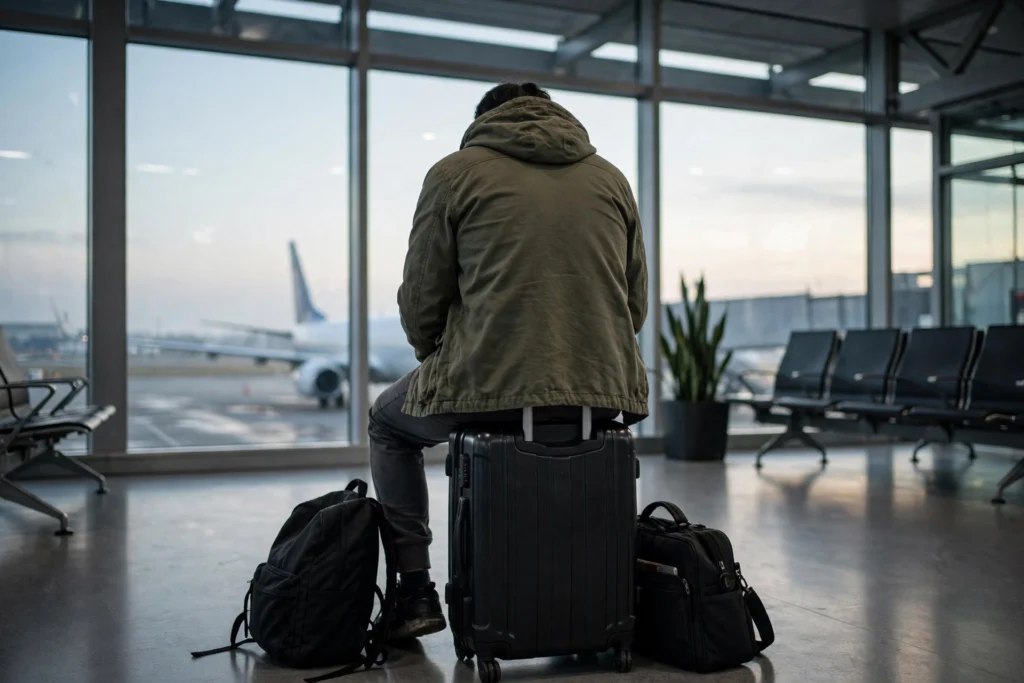
Travel fatigue is the tiredness that builds from travelling itself: disrupted sleep, constant decisions, waiting, noise and the effort of working around all of it. It is different from jet lag, which comes from crossing time zones, and from burnout, which is a response to chronic work stress. For remote workers who move often, it can build up over weeks and months. This guide explains the differences, the signs to watch for, a seven-day reset and how to change your travel pattern so the tiredness does not return.
It is general information, not medical advice. There is no standard clinical definition of “travel fatigue”, and persistent tiredness can have medical causes. If it lasts or worries you, speak to a doctor.
The short version
- Three different things. Jet lag is a body-clock mismatch, travel fatigue is the wear of moving, and burnout is chronic work stress. They overlap and can feed each other.
- Jet lag usually improves within days. The NHS says it usually improves within a few days as your body adjusts to the new time zone.
- Remote workers carry extra load. Decisions, admin and constant re-setup of routine add up even when each move is small.
- The strongest fix is fewer moves. A fixed base for a week resets most people more than any tip or product.
- See a clinician if it lasts. Tiredness with low mood, poor sleep or other symptoms deserves proper advice.
Travel fatigue, jet lag and burnout compared
| Jet lag | Travel fatigue | Burnout | |
|---|---|---|---|
| Cause | Crossing time zones, so your body clock and local time disagree | The demands of travelling: broken sleep, decisions, waiting, noise, planning | Chronic work stress that has not been managed |
| Typical signs | Poor sleep, daytime sleepiness, difficulty concentrating, stomach upset | Tiredness, irritability, dread of the next move, low motivation to explore | Exhaustion, cynicism about work, reduced effectiveness |
| Timeline | The NHS says it usually improves within a few days | Builds over days to months and eases with rest and routine | Develops over a longer period and needs changes to workload and life |
| What helps | Light exposure, sleep timing, short naps | A fixed base, fewer decisions, sleep, movement | Reducing work stress, rest, support from a professional |
The CDC’s Yellow Book describes jet lag as a temporary mismatch between your internal clock and local time, with symptoms such as sleep disturbance, daytime sleepiness and general malaise. Travel fatigue has no comparable clinical definition, so the second and third columns of the table are our summary of what travellers and nomads commonly report, not a medical classification. Our guide to beating jet lag covers time zones in detail, and digital nomad burnout covers the work-stress side.
After a trip: why you are tired
Most searches for this topic come from people who have just travelled and feel wrecked. Several things can contribute, and they add up.
- Sleep disruption. A different bed, noise and an early or late departure cut sleep before the journey even starts. The NHS advises resting well beforehand and, for flights, sleeping if it is night at your destination.
- Time-zone change. If you crossed zones, jet lag may be part of it. The CDC gives an average adaptation rate of about 1.5 hours a day travelling west and about 1 hour a day travelling east.
- Dehydration and routine changes. Water, meals and movement often slip on travel days. The NHS suggests drinking water and walking around the cabin on flights, and limiting caffeine and alcohol.
- Mental load. Navigating an airport, checking in and finding a new place takes concentration even when nothing goes wrong. This is a common observation, not a measured effect.
For a short trip of two or three days, the NHS suggests you could keep your eating and sleeping times on your home time zone, so you do not have to readjust when you return.
The long-term version for remote workers
For people who work while they move, the tiredness often comes from accumulated load rather than one journey. These patterns are practitioner observations, not findings from a study.
- Decision load. Where to go next, how to get there, where to stay and how long. Each choice is small, and together they drain.
- Admin load. SIM cards, banking, visa dates, insurance and rental contracts return with every move. See eSIM vs local SIM for one admin task you can simplify.
- Routine reset. Gym, café, workspace and sleep patterns start again each time.
- Work does not pause. Deadlines and calls continue on travel days, so recovery time disappears.
- Loneliness. New places mean new people each time. See our guide to making friends while traveling solo.
Signs to watch
These signs suggest you need rest and a lower travel load. They are not a diagnosis.
- You feel tired after sleeping, and it does not lift after a few days in one place.
- You feel dread, not curiosity, when you think about the next move.
- You skip sightseeing, meals out or social plans because you lack energy.
- You are irritable, and small problems feel large.
- Your work quality or focus has dropped.
Some signs need more than rest: a low mood that does not lift, loss of interest in things you usually enjoy, trouble sleeping that continues after you settle, or feeling hopeless. If that sounds like you, speak to a doctor or qualified professional. Our loneliness guide lists help resources.
A seven-day reset
This plan is our own suggestion, not a clinical programme. Adjust it to your work and health.
| Day | Focus |
|---|---|
| 1 | Arrive, unpack fully, buy basic food, go to bed at a normal time |
| 2 | Get outside in daylight and walk for 30 minutes. Keep work to essentials |
| 3 | Set fixed work hours and pick one regular place to work |
| 4 | Do one low-effort social thing, such as coffee with someone you know or a call home |
| 5 | Exercise lightly and cook one proper meal |
| 6 | Take half a day off with no sightseeing and no screens in the evening |
| 7 | Review: how is your energy? Decide whether to stay longer before booking anything |
For sleep after a time-zone change, the CDC advises maximising natural light at your destination and avoiding lengthy daytime naps, noting that short naps of about 20 to 30 minutes can sustain alertness. On melatonin, official sources differ. The CDC says doses of 0.5 to 1 mg are often sufficient and that timing matters, while the NHS does not recommend melatonin tablets for jet lag because there is not enough evidence they work. Talk to a pharmacist or doctor before taking any supplement. Our supplements guide looks at the evidence.

Change how you travel
The most reliable fix is fewer, longer stays. As a judgment rather than a research finding, many people find that moving more than about once a month wears them down, though this varies a lot with age, health, work and how far each move is. Our guide to slow travel explains how long to stay in each base.
- Book the next stay before you leave the current one, so you are not planning during a move.
- Build rest days around travel days. Do not schedule a big deadline for the day after a flight.
- Keep a small, repeatable kit. See our packing list and ergonomic travel gear guide.
- Protect movement, food and sleep. See how to stay fit while traveling and how to eat healthy on a budget while traveling.
- Set work boundaries. Our work-life balance guide has sample schedules.
Frequently asked questions
Is travel fatigue real?
Tiredness after travel is widely reported and has recognised contributors such as sleep loss and time-zone change. There is no standard medical definition of “travel fatigue” as a condition, so it is best understood as a description of how travel wears people down.
How long does travel fatigue last?
It varies. After a trip, jet lag usually improves within a few days, according to the NHS. Fatigue that builds over weeks of moving can take longer to lift and usually needs a fixed base and rest.
Is it jet lag or burnout?
Jet lag follows time-zone changes and eases within days. Burnout comes from chronic work stress and lasts longer. Travel fatigue sits between them, and all three can overlap. If tiredness persists, speak to a doctor.
How do I recover after a long flight?
Follow the sleep and light advice from the CDC and NHS: spend time outdoors in daylight, keep naps short, avoid long daytime sleep, drink water and adjust your sleep schedule to local time. Keep the first day light on work.
What if I am tired of traveling altogether?
Persistent tiredness of travel can signal that the pace or the lifestyle no longer fits. Try a slower pattern first. If the feeling lasts for months, read our guide to deciding whether to stop being a digital nomad.
Sources
- CDC Yellow Book 2026, “Jet Lag Disorder”. cdc.gov. Page dated 23 April 2025. Accessed October 2026.
- NHS, “Jet lag”. nhs.uk. Last reviewed 31 May 2023. Accessed October 2026.
Last reviewed: October 2026. This article is general information, not medical advice. Health guidance changes, so check the official sources linked above, and speak to a doctor if tiredness persists.